Address
304 North Cardinal St.
Dorchester Center, MA 02124
Work Hours
Monday to Friday: 7AM - 7PM
Weekend: 10AM - 5PM

Address
304 North Cardinal St.
Dorchester Center, MA 02124
Work Hours
Monday to Friday: 7AM - 7PM
Weekend: 10AM - 5PM
Unless otherwise specified ,a slight draft is ordinarily given to the vertical surfaces of the piece. The reason for this is obvious when consideration is given to the fact that the injection molding plastic piece has to be released with the least amount of trouble. About a 3° taper is sufficient to accomplish the desired result and even less is sometimes permissible. Again
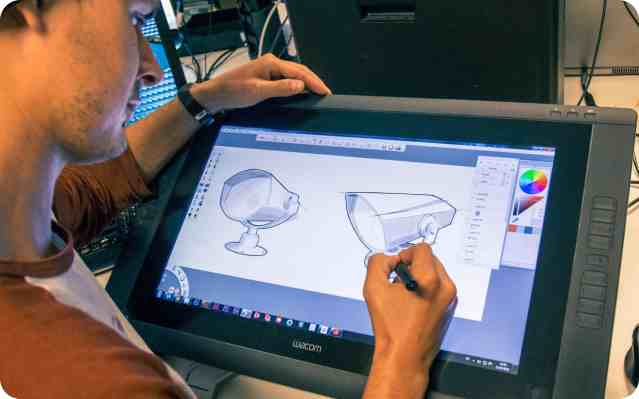
it should be explained that innumerable pieces are molded with the vertical sides at 90° with the horizontal, but it is a much more difficult molding proposition due to the tendency to adhere to either the top force or bottom cavity.
Very often it is desirable to have the piece cling to either the top or bottom depending upon the knockout mechanism. Small dints are made on the force or in the cavity which, of course, act as very moderate undercuts, and hence accomplish the desired result. This procedure is resorted to in instances where the part fails to adhere to the section of the mold, as planned in designing the die.
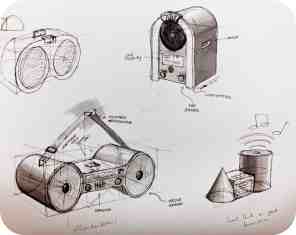 When small holes are part of the design of the finished piece these are made with steel pins while holes of large diameter are obtained by the use of plugs. Care must be exercised in designing the depth of a hole inasmuch as long pins in the mold will tend to bend or break off during the closing of the injection molding machine under heavy pressure. A good rule to observe in this respect is never to have the depth of the hole over three and one half times its diameter. One method of molding long and narrow holes is to have two pins meet half way through the hole. This results in gaining a depth of seven times the length of the diameter, but is possible only where the hole goes through the entire piece. A liberal draft must also be provided for any long pins.
No holes should ever enter a piece on a slant, for as can be seen, any such injection mold design would prevent straight draw of the top force. Of course, die construction of this type is possible inasmuch as slanted pins could be removed prior to the opening of the press, but seldom if ever are inclined holes placed in a piece. Side holes can be made by entering retractable pins in the side of the mold, but their length is limited even more than when the holes are placed vertically. Down pressure on a pin supported only at one end prohibits its extension very far toward the interior.

