Address
304 North Cardinal St.
Dorchester Center, MA 02124
Work Hours
Monday to Friday: 7AM - 7PM
Weekend: 10AM - 5PM

Address
304 North Cardinal St.
Dorchester Center, MA 02124
Work Hours
Monday to Friday: 7AM - 7PM
Weekend: 10AM - 5PM
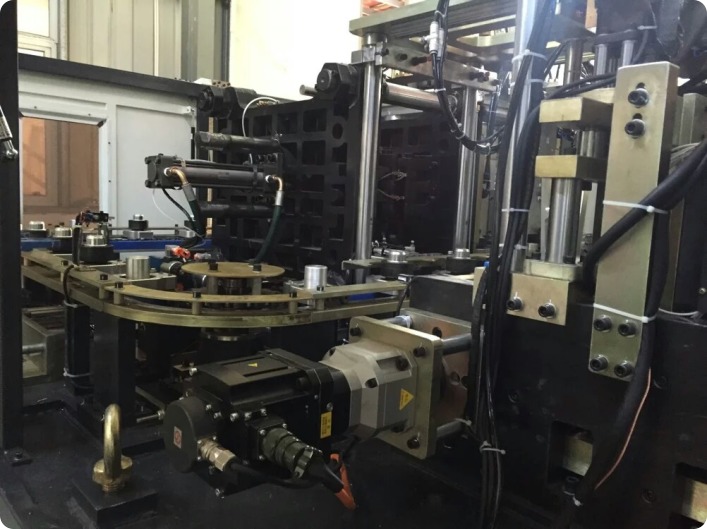 Statistics for the plastics industry show that the major portion of plastics materials passes through an extruder at some stage in processing enroute to the final product. The extruded material may be only the raw material for another molding process, such as injection molding, blow molding, compression molding, or another extrusion. Either thermoplastic or thermosetting material can be and is processed through an extruder at some stage of producing molding material. However, this chapter will be confined to the extrusion of finished products with the provision that a particular finished product may be an intermediate step to still other finished products, for example, extruded film that eventually becomes a trash bag, a wastebasket liner, or a sandwich bag.
The extrusion process is fundamentally a simple process, especially when we describe it as “the forcing of a softened plastic material through a shaped channel in a die, and through the die orifice.” In practice, the use of sophisticated tooling makes extrusion one of the most versatile of the many methods for producing plastics products.

A constant cross section is the primary characteristic of an extruded shape. By the nature of the process, the length of the cross section is limited only by the auxiliary equipment available to store the output in a manageable form. .For example, wire coated by extruding a plastic coating can be thou-sands of feet long on one take-up reel. Other products are cut to length by cutters moving at the same rate as the moving extruded section. There are tooling variations (dies or auxiliary equipment) that make it possible to create periodic changes in cross section and, thus, extend the range of products which can be produced by extrusion. Typical extruded products include tube, film, wire jacketing, and profile shapes. It is also possible to combine plastics with other material while extruding the plastics. Such combinations as plastic coated paper, plastic coated cloth, lamination of multiple layers of plastics (including more than one variety of plastic in the various layers) are examples of combinations.
One or more of the references at the end of the chapter details the auxiliary equipment. Other references detail the extruder as a machine, and include the geometry of the screw(s). Thus, there is no need to discuss that particular material in this text. This chapter is intended to provide the basic principles of designing an extrusion die (previously referred to as the orifice),which is always located at the exit end of the extruder barrel. The rotating screw propelling the plastic melt is contained in a tube called a barrel. Our definition of tooling includes the die, any post-shaping units, handling equipment, and a suitable melt delivery system. The melt delivery system includes all of the system components preceding the die or the orifice.
The usual melt delivery system is a single-screw extruder. Its function is to supply a continuous nonfluctuating stream of plasticized material at the correct temperature and pressure to the die. The single-screw extruder is used for over 75% of all extrusion. The remainder is done through the screw or other types of machines designed to perform on some specific plastic material, such as PVC.
Inasmuch as the product made by extrusion results from several tooling elements and pieces of equipment, operations are separated into several categories. One category is called “standard products,” and consists of such items as sheet, film, tube and pipe, rod, monofilament, and wire coating.
A second category is profile shapes and specialty extrusions. The third category is a “catchall” miscellaneous group of operations, which includes the use of extruders in conjunction with injection molding, blow molding, and compounding.

