Address
304 North Cardinal St.
Dorchester Center, MA 02124
Work Hours
Monday to Friday: 7AM - 7PM
Weekend: 10AM - 5PM

Address
304 North Cardinal St.
Dorchester Center, MA 02124
Work Hours
Monday to Friday: 7AM - 7PM
Weekend: 10AM - 5PM
Align the scope line by line before you compare the price. A lower total often means fewer cavities and cheaper steel. It can also mean no spare parts and fewer trial runs. Ask each supplier to price the same scope in writing. Then compare the totals.
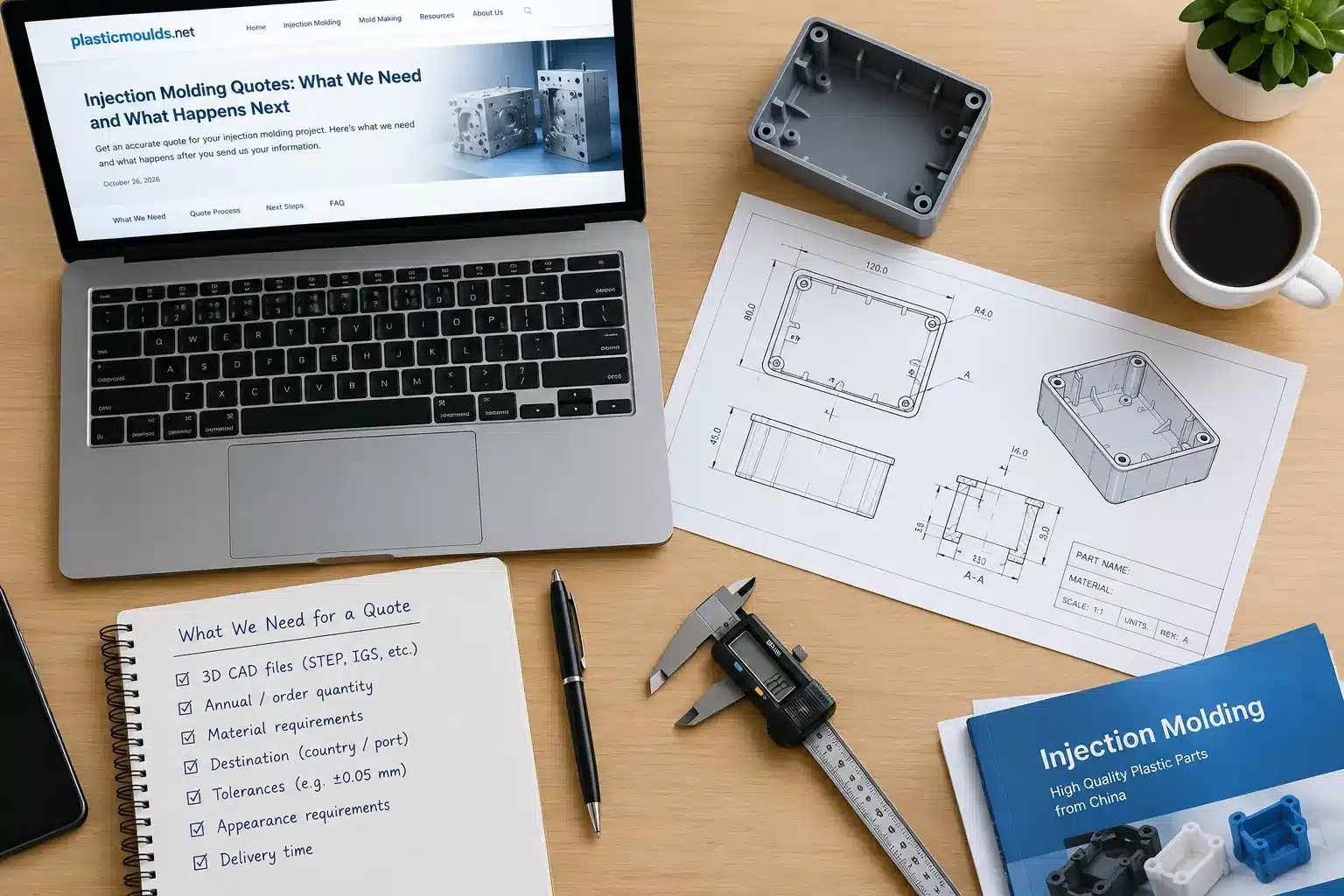
Different scope makes the totals incomparable. One quote may cover two cavities and a hot runner system. The other may cover one cavity and a cold runner system. One quote may cover three trial runs and full dimensional reports. The other may cover one trial run and no reports. The totals hide these gaps. Read the scope lines first and the price last. List every missing item in a separate column. Ask for a revised quote that adds the missing items. Do not rank suppliers until both quotes cover the same work. A quote that looks cheap can cost more after you add the missing scope.
Steel grade and cavity count move the price most. Runner type and trial runs also move it. Steel sets the base cost and the mold life. Cavity count sets the mold size and the machining time. A hot runner system adds heaters and a manifold. It also adds a controller. Trial runs add machine time and material. They also add inspection time. Surface finish also changes cost, and a polished cavity costs more than a textured cavity. Packaging and shipping can add a visible amount for a large mold. Ask each supplier to show these items as separate lines. If a line is missing, ask for its price in writing. A single lump sum hides the cost drivers. Separate lines let you see where the gap comes from.
Check the steel grade and the hardness in the quote text. Check the cavity count there too. Look for P20, 718H, NAK80, S136, or H13 by name. Ask for the hardness value in HRC for the core and the cavity. Ask whether the steel is pre-hardened or heat treated after machining. Check the cavity count and layout on the quote drawing. A two-cavity mold should show two cavities in the layout. Ask for the shot size and the press tonnage that the cavity count needs. A higher cavity count needs a larger press and a larger mold base. Ask for the mold base size in millimetres. Ask for the gate type and the gate location for each cavity. If the quote says “steel as required” with no grade, ask for the grade in writing. A vague steel line is a scope gap, not a detail.
Compare the runner system as a full package, not as one line. A hot runner quote should list the manifold and the nozzles. It should also list the heaters and the temperature controller. Ask for the brand and the model of the hot runner system. Ask whether the controller is part of the price. Ask how many heating zones the system has. A cold runner quote should list the runner size and the expected runner weight per shot. Ask how the runner waste is handled in the part price. Ask whether the part price covers regrind use. A hot runner system can cut material waste and shorten the cycle. A cold runner system can cost less at the start and suit low volumes. The right choice depends on part volume and resin price. It also depends on cycle time. Ask each supplier to state the cycle time they used for the part price. If the cycle times differ, the part prices are not comparable.
Trial runs and acceptance terms decide whether the mold is ready for production. Ask how many trial runs the quote covers. Ask how many sample parts each trial run provides. Ask who pays for resin and machine time in each trial. Ask who pays for inspection too. Ask for the trial report format before you sign. A trial report should list shot size and cycle time from the injection molding process. It should also list part weight. It should list key dimensions with measured values. Ask for the drawing tolerance for each key dimension. Ask which dimensions are critical and which are reference only. Ask for the acceptance rule in writing. State the number of consecutive good parts that pass acceptance. State the sample size for dimensional checks. State who signs the acceptance form and when. If a quote covers no trial runs, add the cost of at least one trial run. A mold with no trial plan is not ready for a fair comparison.
Spare parts and after-sales terms protect production after delivery. Ask for a spare parts list with prices. The list should cover ejector pins and springs. It should also cover heaters and thermocouples. Add seals to the list. Ask for the quantity of each spare part in the quote. Ask for the lead time for each spare part. Ask for the warranty period in months and what it covers. Ask whether the warranty covers steel cracks and heater failure. Ask whether it covers water leaks too. Ask for the response time for a warranty claim in working days. Ask who pays for shipping of a warranty repair. Ask for the mold maintenance guide and the lubrication schedule. Ask for the water line layout and the cooling channel cleaning method. If the quote has no spare parts, ask for the price of a basic spare kit. A mold without spare parts can stop production for weeks.
Build one sheet with the same rows for both suppliers. Use the rows in the table below. Fill each cell with a yes, a no, or a number. Leave no cell blank. A blank cell is a question, not a zero. Send the sheet to both suppliers and ask them to fill the gaps. Ask for the revised totals in writing. Compare the revised totals only after the sheet is full. Keep the sheet with the signed quote. It becomes the record of what each supplier agreed to deliver. If a supplier will not fill the sheet, note that in your file. A supplier who avoids a clear scope list may avoid clear delivery later.
| Scope item | Supplier A | Supplier B |
|---|---|---|
| Steel grade and hardness | ||
| Cavity count and layout | ||
| Runner type and brand | ||
| Surface finish grade | ||
| Trial runs and sample count | ||
| Dimensional report format | ||
| Spare parts list | ||
| Warranty period and cover | ||
| Packaging and shipping | ||
| Delivery date and penalty |
Ask for the final scope list in writing and check it against your drawing. Check the steel grade and the cavity count on the final list. Check the runner brand there too. Check the trial count and the sample count. Check the acceptance rule too. Check the delivery date and the shipping terms. Check the press safety standard for the machine that will run the mold. Check the payment terms and the amount due at each stage. Ask for the mold design file and the drawing revision number. Ask for the name of the project contact and the weekly report day. Send any change as a written change order with a price and a date. Do not accept a scope change by phone with no written record. Sign only after both quotes cover the same scope and the totals match that scope.

