Address
304 North Cardinal St.
Dorchester Center, MA 02124
Work Hours
Monday to Friday: 7AM - 7PM
Weekend: 10AM - 5PM

Address
304 North Cardinal St.
Dorchester Center, MA 02124
Work Hours
Monday to Friday: 7AM - 7PM
Weekend: 10AM - 5PM
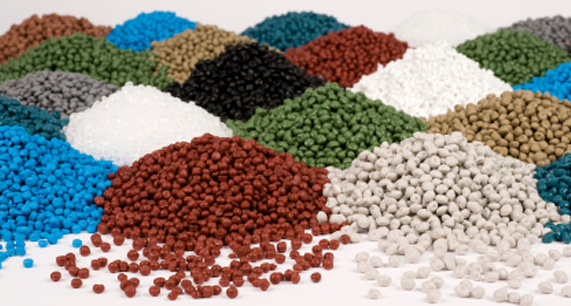 The term “plastics” has been applied to those synthetic non-metallic materials that can be made sufficiently fluid to be shaped readily by casting, molding, or extruding, and which may be hardened subsequently to preserve the desired shape.
Plastics as engineering materials are constantly proving themselves useful in present-day designs. In spite of the continued introduction of new materials and processes on an extensive scale, the industry has achieved maturity. The use of plastics is following the same course of development and application that was characteristic of the introduction of light metals and stainless steel. Costs have been reduced, uniformity and reliability of materials have been improved, and possible applications have been determined. Plastics are attractive materials and offer advantages in weight, cost, moisture and chemical resistance, toughness, abrasive resistance, strength, appearance, insulation (both thermal and electrical), formability, and machinability.
One of the earliest and largest users of plastics was the electrical industry, which is a leader in the use of thermosetting and laminated plastics. Electrical companies entered the field of plastics to capitalize on benefits to electrical products. Their products spurred, in turn, the development and application of plastics for many parts that had no electrical function.
By virtue of their thermal characteristics, plastics usually are divided into two groups, thermoplastic or thermosetting. Those that undergo no chemical change in the molding operation may be softened again by heating to the temperature at which they originally became plastic, and therefore are termed “thermoplastic.” Since they become increasingly softer with increase in temperature, certain members of the thermoplastic family are liable to permanent distortion under mechanical strain at relatively low temperature (140°F.). They may flow to an appreciable extent under load at room temperatures. Plastics that are hardened permanently by a fundamental chemical change in the molding operation are termed “thermosetting plastics.” The chemical change is called “polymerization,” which is defined as “the reaction by which single molecules are linked to form large molecules without change in fundamental chemical composition.” These materials, once molded, will distort under stress at approximately 250°F., but they will not become soft or fusible. Thermosetting materials will char and burn at high temperatures. They are inclined to have greater tensile strength and hardness, and, in some cases, are lower in raw material cost than thermoplastics. Thermoplastics, on the other hand, have generally higher impact strength, pleasing appearance, and can be converted into a finished product at lower manufacturing cost.

